Some nights you want a full reset, not a full lecture. You light a candle, clear a corner of the table, and you just want one honest question answered: “What’s going on with me lately?” Tarot is built for that moment. Not as a fortune-telling performance, but as a practical tool for reflection that feels personal, a little mystical, and surprisingly grounding.
If you’re shopping for tarot cards for beginners, the hardest part is not the reading. It’s the beginning - choosing a deck, figuring out what to ask, and learning how to trust your own interpretation without overthinking every symbol.
What tarot actually does (and what it doesn’t)
Tarot works best when you treat it like a mirror, not a megaphone. The cards give you a structured way to look at your situation from different angles: what you want, what you’re avoiding, what’s influencing you, and what you can do next.It’s also okay to have your own belief system here. Some people read tarot as pure psychology. Others see it as spiritual guidance. Most land somewhere in the middle, using tarot as an intuitive practice that helps them slow down and make better choices.
What tarot typically does not do well is deliver fixed, movie-style predictions. If you ask, “Will I definitely get the job on Tuesday?” you’re setting yourself up for anxiety. If you ask, “How can I show up stronger in this interview process?” you’ll get something you can actually use.
Choosing tarot cards for beginners: what to look for
A beginner-friendly deck is the one you’ll actually pick up. That sounds obvious, but it’s the difference between a deck that becomes part of your routine and one that lives in a drawer.Start with imagery that makes sense to you at a glance. Decks inspired by the classic Rider-Waite-Smith structure tend to be easier because most guidebooks and learning resources map to it. If you buy an artistic or highly abstract deck, you may love the vibe, but you’ll rely more on intuition and less on shared “standard” meanings, which can feel like swimming without a lane rope.
Card size matters more than people admit. If you have smaller hands, oversized cards get annoying fast, and “annoying” is the fastest way to stop practicing. Also check the card stock. Very glossy cards can stick together, while ultra-matte stock can scuff. Neither is wrong, it just depends on whether you’re reading at home, traveling, or reading around candles and oils.
A solid guidebook helps, especially one that explains meanings in regular language instead of poetic riddles. If your guidebook makes you feel like you need a dictionary, it’s not supporting you.
The structure: Major Arcana vs Minor Arcana
Tarot has 78 cards. That number can feel like a lot until you realize the system is organized.Major Arcana (22 cards)
These are the “big themes” cards. They’re the ones that tend to describe life lessons, identity shifts, and pivotal choices. When you pull several Major Arcana in one reading, it usually means you’re dealing with something that affects your direction, not just your mood.Minor Arcana (56 cards)
These are more day-to-day: habits, conversations, money decisions, stress patterns, relationships, and the way things play out in real life.The Minor Arcana is split into four suits:
Wands connects to motivation, ambition, and creative energy.
Cups connects to emotions, relationships, and what you’re longing for.
Swords connects to thoughts, communication, conflict, and clarity.
Pentacles connects to money, work, the body, and practical stability.
If you remember nothing else, remember this: Major Arcana is the headline, Minor Arcana is the details.
A simple way to learn card meanings without memorizing
You don’t need to brute-force memorize 78 definitions. You need a method you can repeat.Start by learning the “feel” of each suit. Wands feels like spark and push. Cups feels like pull and sensitivity. Swords feels like mental pressure or mental precision. Pentacles feels like slow-building reality.
Then learn the numbers 1-10 as a progression. Aces are beginnings. Twos are choices or balance. Threes are growth and collaboration. Fours stabilize. Fives challenge. Sixes adjust and move forward. Sevens test you. Eights build momentum. Nines intensify. Tens complete and spill into the next chapter.
Finally, layer in the court cards. Pages are curiosity and early-stage learning. Knights are action and momentum. Queens are internal mastery and embodiment. Kings are external leadership and direction.
With that approach, even a card you’ve never studied becomes readable. For example, the Eight of Pentacles will almost always suggest effort, repetition, and skill-building in the real world. You didn’t memorize it, you understood the structure.
Your first tarot routine: keep it easy, keep it consistent
The fastest way to get comfortable with tarot is to read often, but small. A daily pull is perfect because it builds a relationship with your deck.Try this for seven days:
Each morning, pull one card.
Ask: “What energy should I work with today?”
Write down three keywords, then one sentence about how it could show up.
At night, check in: Did it show up exactly? Did it show up sideways? Did it show up internally?
That last part is where beginners level up. Tarot rarely shows up like a billboard. It shows up like a pattern.
Beginner spreads that actually help
You don’t need complicated layouts with ten cards and positional rules. You need spreads that reduce noise.The 1-card clarity pull
Best for quick decisions and emotional check-ins.Ask: “What do I need to understand right now?”
Trade-off: one card can be blunt or vague if your question is vague. Make your question clean.
The 2-card choice spread
Use this when you’re stuck between two options.Card 1: If I choose option A, what’s the likely experience?
Card 2: If I choose option B, what’s the likely experience?
This doesn’t “pick for you.” It shows you the tone of each path so you can choose on purpose.
The 3-card grounded spread (great for tarot cards for beginners)
This is the sweet spot when you want insight without overwhelm.Card 1: Where I am now
Card 2: What’s influencing me
Card 3: A helpful next step
Notice that the third card is action-oriented. That’s intentional. Beginners often spiral into “What does it mean?” and forget to ask, “What do I do?”
How to ask better questions (so you get better answers)
Tarot rewards honesty. If your question is really “Do they like me?” you might pull a card and still feel unsure because the real question is “What am I afraid of here?”Good tarot questions focus on you, your choices, and your awareness. “How can I communicate clearly?” “What am I not seeing?” “What’s the healthiest boundary?” “What will help me feel steady this week?”
If you want timing, keep it flexible. Ask, “What’s the energy around the next 30 days?” instead of “What will happen next Friday at 3 PM?” Tarot is better with seasons than timestamps.
Reversals: should beginners use them?
It depends on your personality. Reversals (cards drawn upside down) add nuance, but they can also add confusion when you’re still building your foundation.If you’re an overthinker, skip reversals for your first month. Read upright only and focus on clarity. If you like complexity and you don’t spiral, you can use reversals as “blocked, internal, delayed, or intensified” energy.
Either choice is valid. Consistency matters more than rules.
Creating a vibe that makes you want to practice
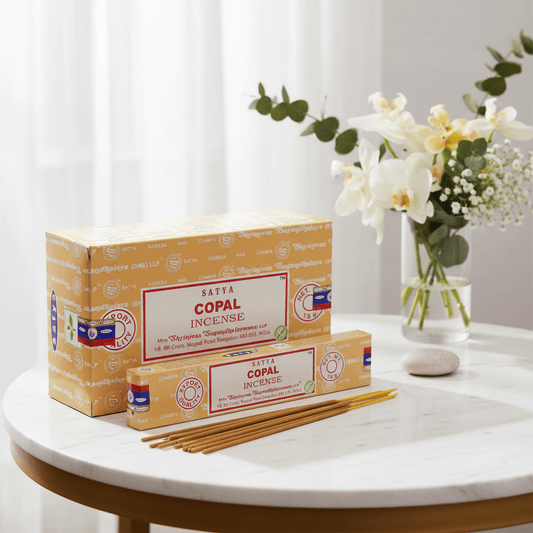
Tarot is a habit. Habits stick when they feel good.Keep your deck somewhere visible. Pair your reading with something sensory: a candle scent you associate with calm, a light incense, a cup of tea. It’s not about being dramatic; it’s about training your brain to shift into reflective mode.
If you’re building a small ritual corner, you can keep it simple: a cloth to read on, a notebook, and one or two grounding items like a crystal or a calming aromatherapy blend. If you like shopping your rituals like you shop your self-care, you’ll find tarot fits naturally alongside home fragrance and wellness tools - and you can pick up decks and ritual-friendly extras at Auras Workshop when you’re in a “make it a whole vibe” mood.
Common beginner mistakes (and how to avoid them)
One big mistake is pulling too many cards. If you don’t like the message and you keep pulling until you do, you’re not reading anymore, you’re negotiating. When you feel that urge, stop, breathe, and ask a better question.Another is reading every “scary” card as doom. The Tower can mean a truth you can’t ignore. Death can mean an ending that makes room for relief. The Ten of Swords can mean “stop doing this to yourself” as much as it can mean “this cycle is done.” Context matters, and your position in the spread matters.
Also: don’t outsource your intuition to the guidebook. Use it, absolutely. But after you read the meaning, look back at the image and ask what you noticed first. Tarot gets personal when you let it.