You light a candle, sit down with a notebook, and tell yourself you just want a clear yes or no. Then the pendulum barely twitches, or it spins like it’s showing off, and you’re left wondering if you made it up.
That moment is exactly where most people quit. This pendulum for beginners guide is for the opposite move: slow down, set the rules, and make pendulum work feel like a practical self-care ritual instead of a guessing game.
What a pendulum is (and what it is not)
A pendulum is a weighted object on a chain or cord used for simple directional movements that you interpret as answers. Some people use it as intuition training. Others treat it like energy work. Either way, the tool is basic - the setup is everything.What it’s not: a replacement for medical, legal, or financial advice, or a shortcut around responsibility. It’s also not a “guaranteed truth machine.” If you’re stressed, rushing, or asking messy questions, you’ll get messy results.
The sweet spot is using a pendulum for clarity when your choices are real but your head is loud: timing, priorities, boundaries, next steps in self-care, what to focus on in meditation, which intention to set for the week.
Picking your first pendulum without overthinking it
You can absolutely choose based on aesthetics. If you love it, you will actually use it, and that alone beats the “perfect” pendulum sitting in a drawer.Material does change the feel. Crystal pendulums are popular because different stones carry different associations, and they look great on an altar or nightstand. Metal pendulums often feel more neutral and consistent, especially if you want crisp movement and less emotional attachment. Wood can feel warm and grounding but may be lighter and more sensitive to tiny hand movements.
Weight matters more than most beginners realize. A slightly heavier pendulum tends to give clearer, steadier swings and is easier to read. Very light pendulums can feel jumpy, especially if you’ve had caffeine or you’re holding tension in your fingers.
Chain length also matters. Too long and it becomes hard to stabilize. Too short and it can feel cramped. A comfortable starting point is holding it so the pendulum hangs 6-10 inches below your fingers.
Cleanse first, then claim it
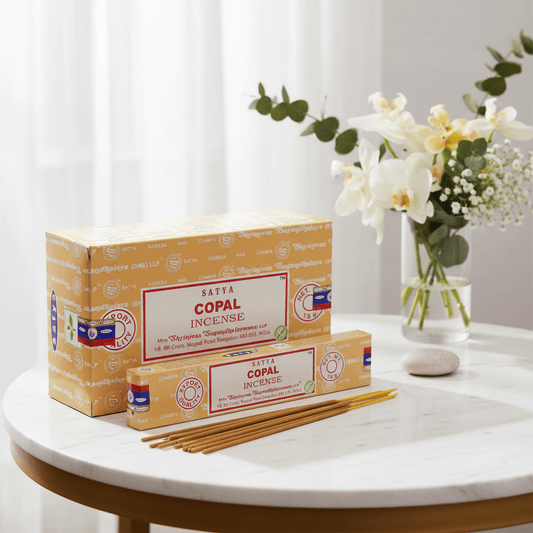
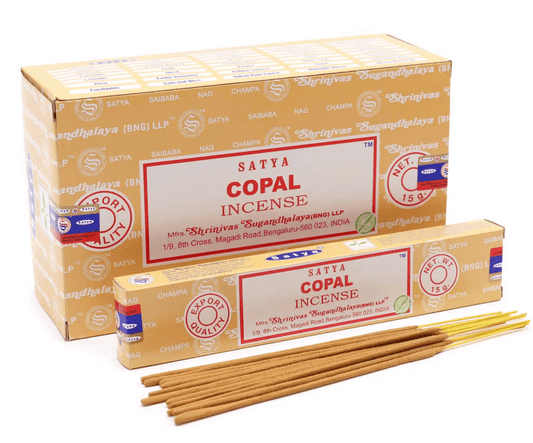
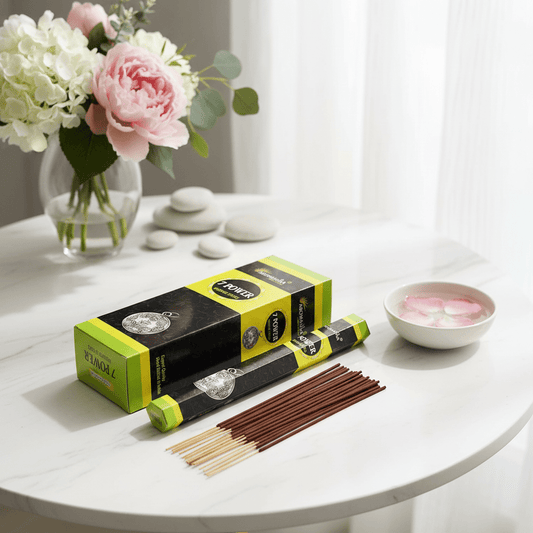
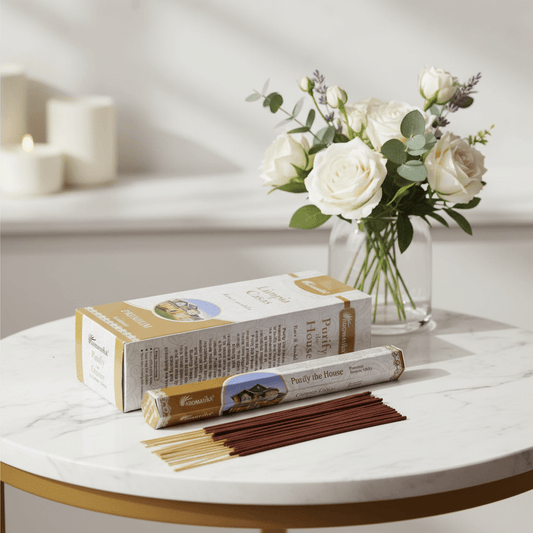
If you’re buying a pendulum from a shop, it’s been handled, packaged, and transported. Even if you don’t think in terms of “energy,” cleansing is still useful because it marks a reset: this is yours, and this is the start of your practice.Keep it simple. You can pass it through incense smoke, place it near a candle (not close enough to heat it), rest it on a clean cloth overnight, or set it beside a bowl of salt without burying it. If it’s a crystal that doesn’t like moisture, skip water cleansing.
Then claim it with a quick intention. Hold it in both hands and say something direct like, “This pendulum helps me access calm, honest answers for my highest good.” You’re not performing. You’re setting a boundary.
Set your signals before you ask anything
Most pendulum frustration comes from skipping this step.Sit with your feet flat on the floor. Rest your elbow on a table if you can, so your hand is supported. Hold the chain between thumb and index finger. Let the pendulum hang still.
Now establish your map:
Ask: “Show me yes.” Watch the movement. It might swing forward and back, side to side, clockwise, or counterclockwise.
Ask: “Show me no.” Watch the movement.
Ask: “Show me maybe” or “not now.” Many people get a small circle, a shaky swing, or a stop.
Ask: “Show me I’m not meant to ask this.” This one is underrated. It protects you from spiraling and helps you recognize when you’re tired, emotionally loaded, or asking something that’s not yours to know.
Write your signals down. Don’t assume you’ll remember, especially if your “yes” and “no” are both circular but in different directions.
A quick note on consistency
Signals can shift if you change posture, location, or emotional state. That’s not failure. It’s feedback. If your signals feel different today, re-calibrate instead of forcing it.How to hold and stabilize your pendulum
Tiny muscle movements can influence the swing. That doesn’t mean it’s fake - it means you need a repeatable setup.Use a supported elbow and keep your wrist relaxed. Let the chain run straight down without wrapping it tightly around your fingers. Breathe low and slow.
If you notice your pendulum drifting because your hand is tense, pause. Put the pendulum down. Roll your shoulders back. Try again.
If it keeps spinning wildly, shorten the chain slightly and ask one reset question: “Show me neutral.” Wait until it quiets.
Ask questions that get usable answers
A pendulum is best at binary choices. If you ask vague questions, it will respond with vague movement.Instead of “Will I be happy?” try “Is this decision supportive for me this month?”
Instead of “Should I text them?” try “Would texting them today support my peace?”
Instead of “Is my relationship going to work?” try “Is there one clear action I can take this week to improve communication?” Then use the pendulum to choose between 2-3 concrete options you already identified.
Avoid these beginner traps
1) Double-barreled questions: “Is this a good idea and will it work out?” Split it.2) Future fixation: asking the same question ten times because you don’t like the answer. That trains you to distrust yourself.
3) Emotional overload: if you’re angry, desperate, or spiraling, your body is loud. Do a grounding ritual first, then come back.
A simple 5-minute pendulum ritual you’ll actually repeat
Keep this light. Consistency beats intensity.Start with one sensory anchor - a candle, a room spray, or a few drops in a diffuser. The point is to cue your nervous system that this is “quiet time.”
Open your notebook and write the date and one sentence: “I’m asking for clarity, not perfection.”
Calibrate yes, no, maybe.
Ask one question only. If you get a “maybe,” follow with: “Is there something I need to do before I can know?” If yes, ask: “Is it rest?” “Is it research?” “Is it a conversation?”
End by saying “Thank you, done for now,” and set the pendulum down. Closing the session matters. It prevents you from turning divination into doom-scrolling.
Reading your results without spiraling
A strong, steady swing is easier to trust than a tiny wobble. But intensity alone isn’t proof. Sometimes a gentle swing is the honest one, especially if your question is loaded.If you’re getting inconsistent answers, don’t immediately blame the tool. Check the basics: are you thirsty, tired, or caffeinated? Are you asking the same question in three different ways hoping for a new result? Are you holding the chain at a different length than usual?
It also depends on what you believe pendulum is doing.
If you see it as intuition training, inconsistency is a sign your inner signals are mixed. That’s useful information.
If you see it as energy work, inconsistency can mean your space feels off, you need cleansing, or you’re not grounded.
Either way, the fix is the same: simplify, reset, and return to one clear question.
Pendulum care: keep it clean, safe, and ready
Treat your pendulum like a small ritual tool, not a loose accessory bouncing around your bag.Store it in a pouch or a small box so the chain doesn’t knot. If it’s crystal, avoid dropping it on tile or stone counters. If it’s metal, wipe it occasionally so it stays bright and doesn’t pick up residue from oils or lotions.
If you use it around fragrance, be mindful of smoke and sticky resins. Incense is great for cleansing, but heavy soot buildup can dull the surface over time. A quick gentle wipe keeps it looking boutique-new.
Pairing pendulum with self-care products (without making it complicated)
Pendulum practice sticks when it feels good. Sensory cues help you drop into the moment faster.If you run anxious, choose calming scents for your sessions and keep the lighting soft. If you’re doing morning clarity, go brighter and fresher so you don’t drift into fog.
You can also create a small “decision station” at home: a candle, a coaster, your pendulum, and a pen. When it’s easy to reach, you’ll use it for real questions instead of only pulling it out when life is chaotic.
If you want to build that setup with a curated mix of ritual and self-care pieces, you can find pendulums, candles, incense, and gifting-ready extras at Auras Workshop - it’s designed for the people who like their spiritual tools to feel practical, modern, and actually usable.
When to pause pendulum work
Sometimes the most honest answer is that you need a break.Pause if you’re using the pendulum to outsource every choice, if you feel more anxious after sessions, or if you’re asking about topics that trigger obsession. A pendulum should support your agency, not shrink it.
A good trade-off to accept: pendulum can be quick, but it’s not deep processing. If you need deeper insight, pair it with journaling, therapy, meditation, or a straightforward pros-and-cons list. The pendulum can help you choose a direction, but you still walk the path.
The best pendulum practice is the one that leaves you calmer than when you started - not because you got the “right” answer, but because you learned how to ask cleaner questions and listen to yourself with less noise.