You light a backflow cone, set it on a sculpted burner, and the smoke doesn’t rise like it “should” - it pours down like a tiny waterfall. If you’ve ever watched that cascade and thought, “Okay… what is actually happening here?”, you’re not alone. The effect feels like a magic trick, but it’s really a clever mix of cone design, airflow, and a burner that acts like a smoke highway.
Backflow incense burner how it works (the short version)
A backflow incense burner works because the incense cone is made with a hole through the center, and the burner is built with a matching channel. When the cone smolders, it produces thick smoke that is cooler and denser than the surrounding air. That denser smoke is guided down through the hole and into the burner’s tunnel, then it spills out into the carved “pool” areas where you see the waterfall effect.If any part of that system is off - wrong cone, poor seal, breeze, or a burner that’s clogged - the smoke goes back to normal behavior and drifts upward.
Why backflow smoke falls instead of rises
Most incense smoke rises because warm air rises. A regular incense stick burns at the tip, heats the air, and the smoke rides that warm current upward.Backflow cones are different in two ways. First, they are shaped and packed to create a heavier, more concentrated smoke. Second, they’re engineered to feed that smoke into a downward path.
Here’s the key nuance: the smoke itself is full of tiny particles and aromatic compounds. Once it cools even slightly, it becomes denser than the surrounding air. Dense air wants to sink. Give it a dedicated route down, and it will take it.
That said, it depends on your room conditions. In a very warm room or right under an air vent, the smoke may look thinner or more chaotic. The effect is real, but it’s sensitive.
The cone is doing more work than you think
A true backflow cone has a small hole drilled (or molded) through the center from the bottom up toward the burning area. That hole is not decorative - it’s the engine.When you light the tip, the cone smolders and generates smoke. Because there’s a tunnel inside, smoke gets pulled into that channel rather than freely dispersing into the air.
This is why “regular cone incense” won’t work the same way on a backflow burner. Without the internal hole, the smoke has no reason to go downward through the burner’s pathway. You might still see some smoke drift down the sides of a cone, but you won’t get the waterfall.
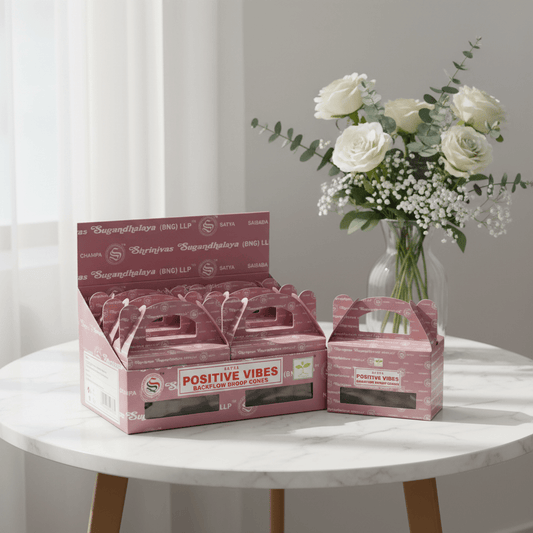
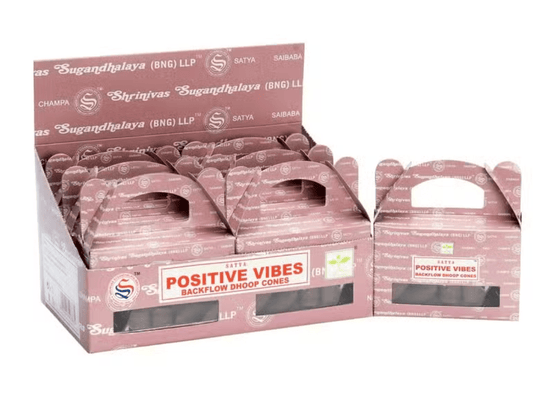
If you’re shopping, look for packaging that clearly says backflow cones. If the product photo shows a hole in the bottom, that’s usually the giveaway.
The burner is a tiny ventilation system
Backflow burners aren’t just pretty ceramics. They’re shaped with a hidden chimney:The top platform holds the cone and has an opening that lines up with the cone’s hole. Under that, the burner has an internal channel that directs smoke downward and out through a “mouth” or slot where the waterfall begins.
That internal channel matters because it stabilizes the flow. Smoke is messy by nature, so the burner’s job is to reduce turbulence and give the smoke a consistent route. When it works well, the smoke collects and pours in a smooth stream. When it doesn’t, you get wisps drifting in every direction.
One practical note: the cleaner and smoother the channel, the better the effect. Even a thin layer of resin buildup can disrupt flow.
What you’re seeing when the “waterfall” forms
When the smoke exits the lower opening, it often pools in the first basin or curve of the burner. That pooling happens because the smoke is denser than air, so it settles like fog in a low spot.As more smoke arrives, it overflows into the next basin. Your eyes read that overflow as a liquid cascade because it behaves similarly to a slow-moving fluid. It’s still smoke, but it’s smoke behaving like a heavy mist.
This is also why backflow looks best against darker, matte surfaces and in steady lighting. Bright direct sunlight can wash out the visual, and glossy surfaces can make the flow harder to see.
Getting the best results at home (it’s mostly placement)
If you want that dramatic, consistent backflow effect, the biggest “hack” is controlling air movement.Place your burner away from open windows, ceiling fans, AC vents, and high-traffic pathways where people keep walking by. Even a small draft will break the waterfall stream and pull smoke sideways.
Also make sure the burner is level. If it’s tilted, smoke can escape from the cone area instead of feeding down the channel, and you’ll see more upward drift.
Lighting technique matters too. You want a stable ember. Hold the flame to the tip long enough to get an even burn, then let it flame briefly before gently blowing it out. If the ember is weak, smoke output is weak, and the waterfall can look thin.
Give it a minute. Backflow isn’t instant. The burner’s channel has to fill and the smoke has to cool and settle. Typically you’ll see the effect build over the first 30 to 90 seconds.
Trade-offs: backflow is visual, but it’s not for every situation
Backflow incense is all about ambiance. It’s a mini ritual you can watch while you journal, pull tarot cards, reset your space, or just make your living room feel more intentional.But there are trade-offs.
The smoke is thicker than what many people expect from a stick. If you’re sensitive to smoke, have pets in a tight space, or prefer a very light scent throw, you may want to burn it for shorter sessions or choose gentler fragrances.
Backflow also leaves more visible residue. Because the smoke is dense and it’s intentionally guided over surfaces, you’ll get more oil and resin settling on the burner over time. That’s normal, but it does mean you’re signing up for more frequent cleaning.
Cleaning and maintenance (so it keeps working)
A backflow burner that “suddenly stopped working” is often just a clogged or sticky channel.Let the burner cool completely. Then wipe the inside and outside where residue collects. Warm water and mild soap usually handle ceramic burners well, but be mindful of any unglazed or hand-painted finishes. If residue is stubborn in the channel, a cotton swab can reach into narrow openings.
Also check the cone seat. If ash builds up where the cone sits, it can prevent a snug seal and the smoke will escape upward instead of feeding down.
Try not to scrape aggressively with metal tools. You want the channel smooth, not scratched.
Safety and scent control (small adjustments, big difference)
Backflow incense is open combustion, so treat it like a candle: always burn on a heat-safe surface, keep it away from curtains, and never leave it unattended.If you want the aroma without turning your whole room into “incense mode,” burn it in a larger room, or try shorter burns. You can also pair it with a non-smoke option on other days, like a room spray, a reed diffuser, or an electric diffuser, depending on your vibe.
Ventilation is your friend. Crack a window after your session to refresh the air, especially if you’re burning daily.
Quick troubleshooting when the smoke won’t flow down
If you’re not getting the waterfall effect, it’s usually one of these:You’re using a regular cone instead of a backflow cone, the cone isn’t centered over the hole, there’s a draft in the room, or the burner’s channel is dirty.
Less common but real: some cones just produce lighter smoke depending on ingredients and moisture level. If one scent barely waterfalls but another pours like a storm cloud, it’s not your imagination.
Make it part of a ritual, not just a trick
A backflow burner shines when it’s paired with something intentional. Set it next to your crystals, your journal, or your evening skincare lineup. Use it as a visual timer for a 10-minute reset. The whole point is the moment it creates - the pause, the scent, the calm, the little theater of smoke moving like water.If you’re building a home ritual corner and want everything in one place, that’s exactly the kind of curated mix we keep at Auras Workshop - from incense and burners to candles, oils, and giftable self-care picks.
Closing thought: if the backflow effect is finicky on a busy day, don’t fight your space - adjust the space to fit the ritual, even if it’s just turning off the fan for ten minutes.