Перейти к контенту
Amethyst

Photo: W.carter / Wikimedia Commons (CC BY-SA 4.0)

Amethyst

Also known as: Purple quartz

Purple quartz, the February birthstone, famous since ancient Greece as the stone of calm and a clear head.

  • ColourPurple, Lilac, Violet
  • Mineral groupQuartz
  • ChemistrySiO₂
  • Hardness (Mohs)7
  • Crystal systemTrigonal
  • Where it's foundBrazil, Uruguay, Zambia, Madagascar, Mexico
  • ChakraCrown, Third Eye
  • ZodiacPisces, Aquarius, Virgo, Capricorn
  • BirthstoneFebruary

What is Amethyst?

Amethyst is the purple variety of quartz. Its colour comes from traces of iron combined with natural radiation in the rock, which creates colour centres in the crystal. It ranges from pale lilac to deep royal purple and often shows zones of lighter and darker colour.

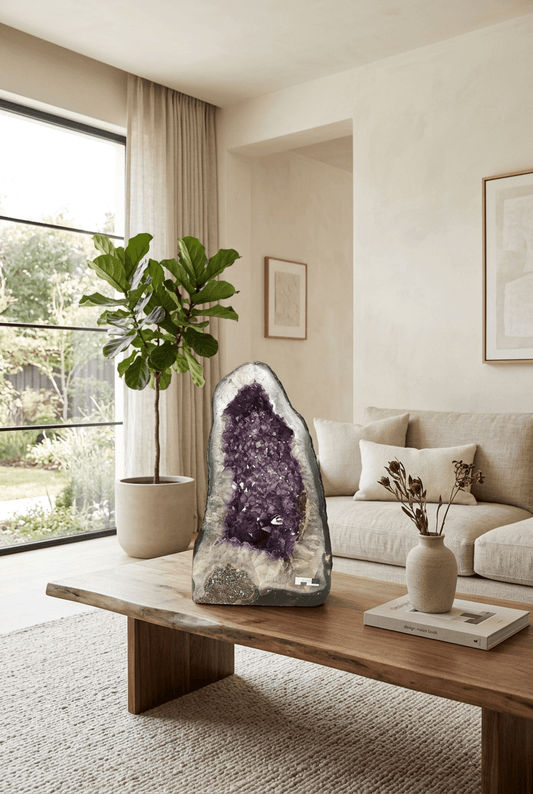
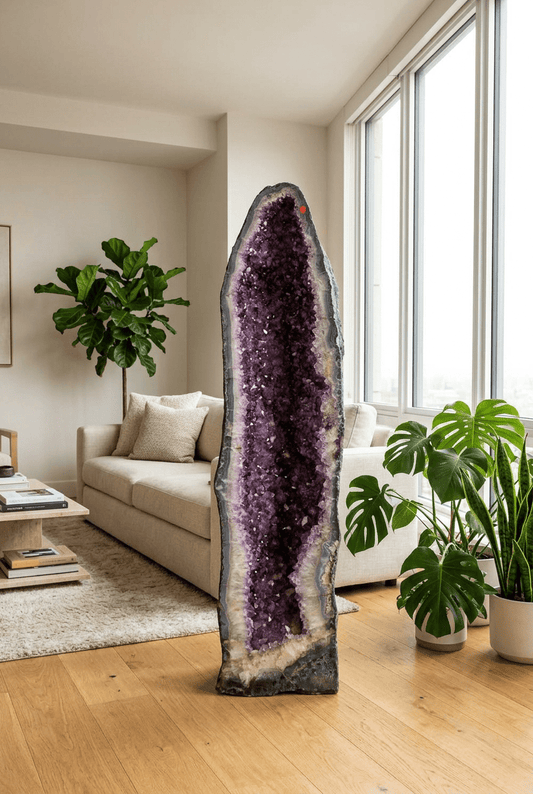
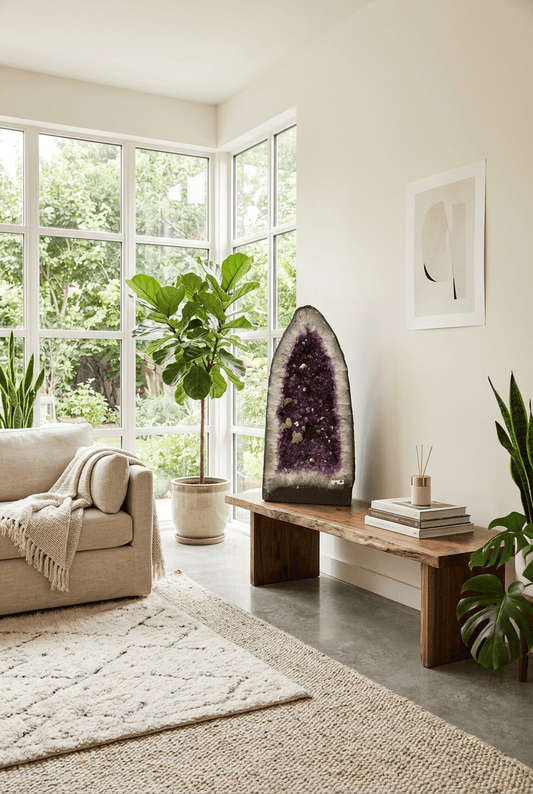
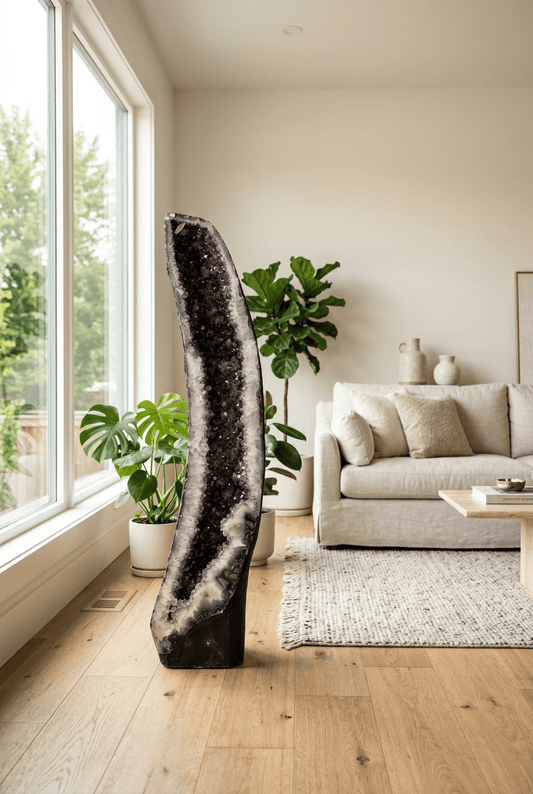
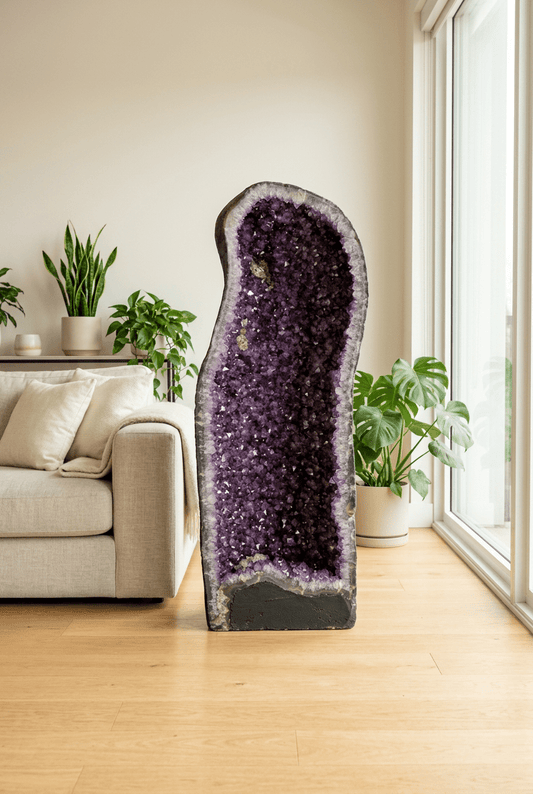
Amethyst grows in many geological settings, but the great geodes lining shop windows come mostly from volcanic rocks in Brazil and Uruguay. Zambia produces some of the deepest purple material.

The name comes from the Greek amethystos, meaning "not intoxicated" – the ancient Greeks believed it protected against drunkenness. Fine amethysts once ranked alongside ruby, emerald and sapphire, and they appear in the British Crown Jewels and on bishops' rings.

Amethyst astrology & birthstone

Zodiac, planet and element links come from crystal-lore traditions and vary between authors. Birthstone months follow the American Gem Society list.

Amethyst meaning & traditional properties

Amethyst is one of the best-loved stones in crystal traditions. It is associated with calm, peaceful sleep, intuition and spiritual awareness, and has a long history as a stone of sobriety and a clear mind.

  • Calm
  • Sleep
  • Intuition
  • Clarity

Traditional and metaphysical properties are shared for cultural and educational interest. Crystals are not a substitute for medical advice or treatment.

How to use Amethyst

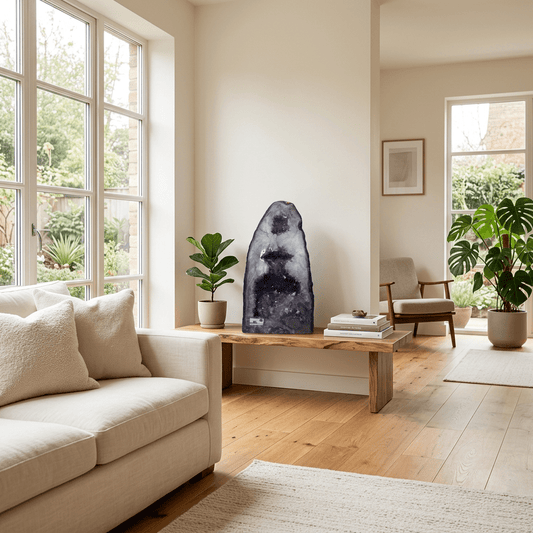
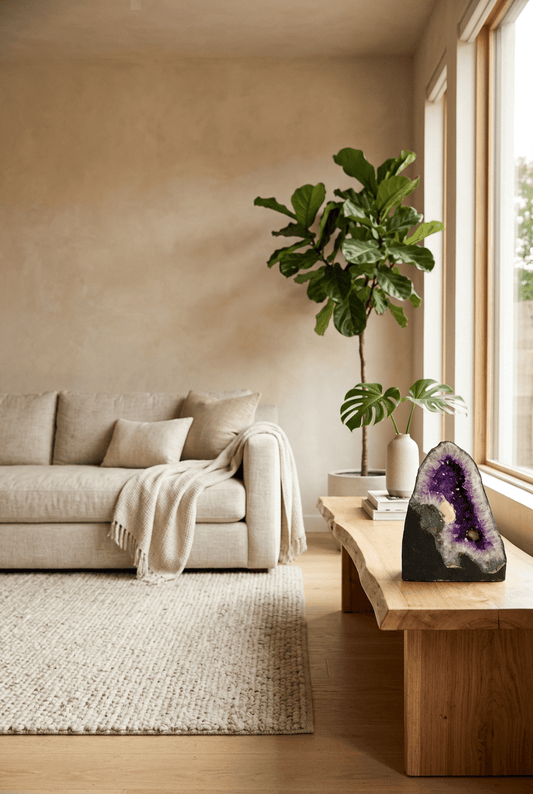
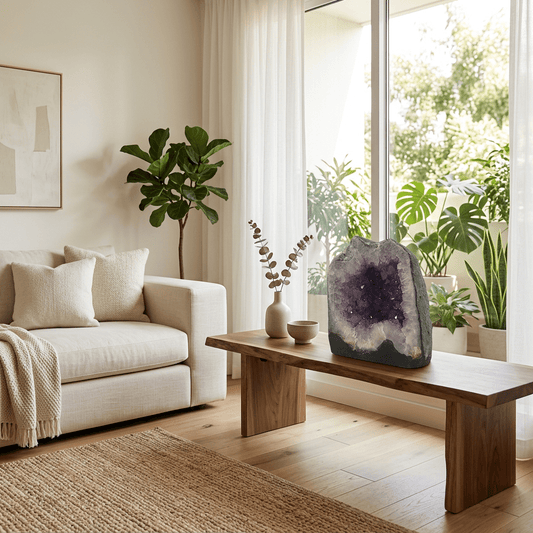
  • Place an amethyst cluster or geode in the bedroom or meditation space.
  • Keep a tumbled stone under your pillow or on the bedside table.
  • Wear amethyst jewellery as your February birthstone.

How to care for Amethyst

Amethyst is hard (7) and suits everyday wear. Clean with warm soapy water. Keep it out of long, direct sunlight and heat, which can fade the purple – strong heat can even turn amethyst yellow.

Shop Amethyst

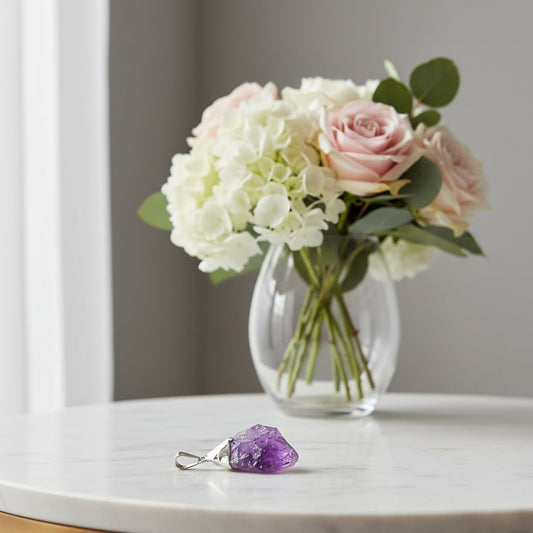
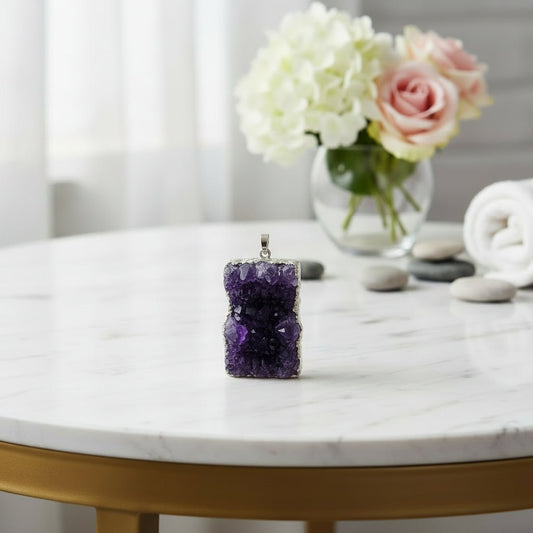
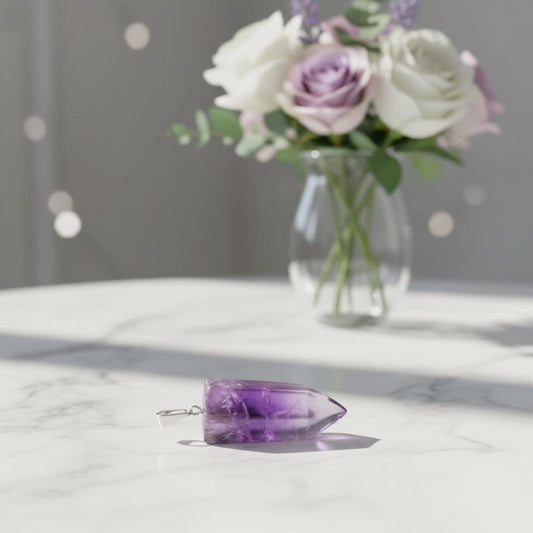
Hand-picked amethyst crystals and jewellery from our Paralimni workshop.

Rituals & pairings

Pair Amethyst with a calm & sleep ritual

An evening wind-down ritual to slow the mind before rest.

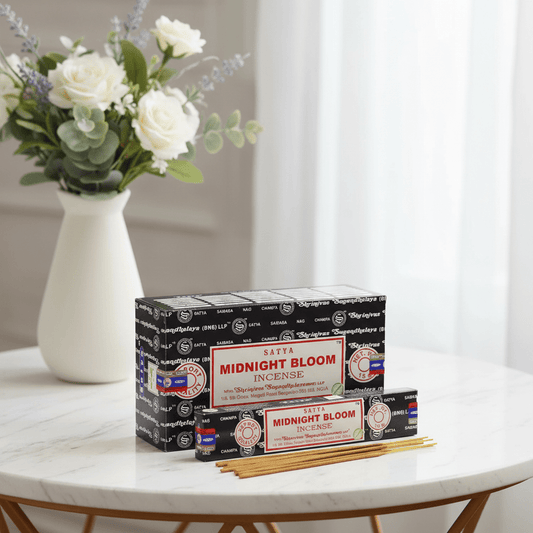
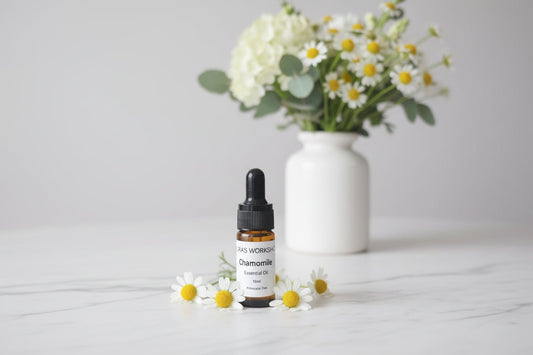
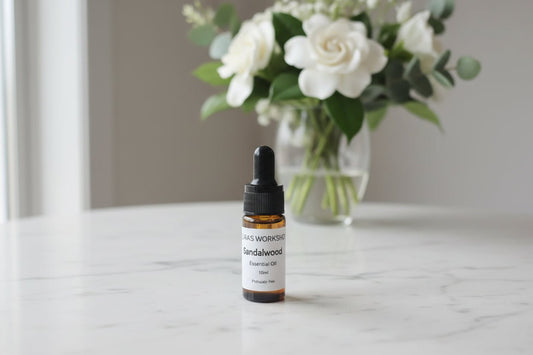
Traditionally paired with: Lavender or chamomile incense · Sandalwood or Nag Champa · A soft lavender or white candle
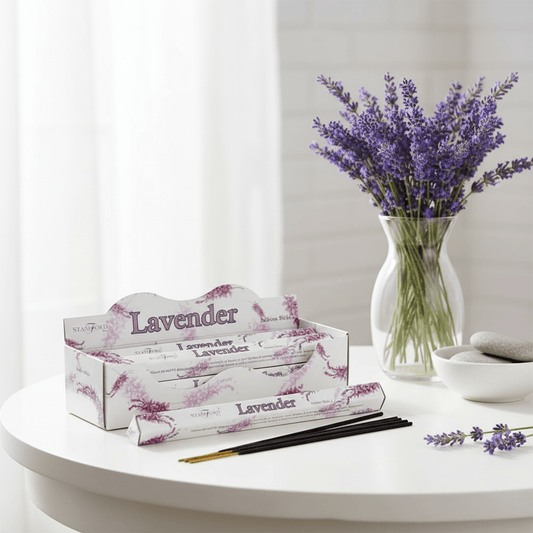
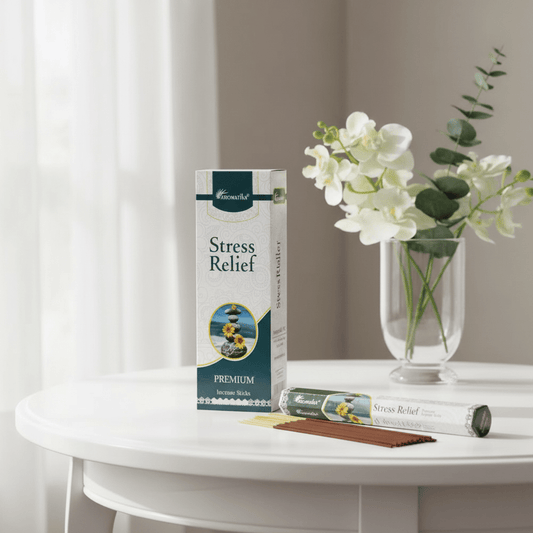
  • Dim the lights and light a lavender or chamomile candle.
  • Light sandalwood or lavender incense and take five slow breaths.
  • Hold your crystal in your palm while you let the day go, then place it on your bedside table.
  • Blow out the candle before you sleep.

Safety: never leave candles, incense or smudge sticks burning unattended, keep them away from children, pets and anything flammable, and ventilate the room. Rituals are shared as tradition, not as a treatment.

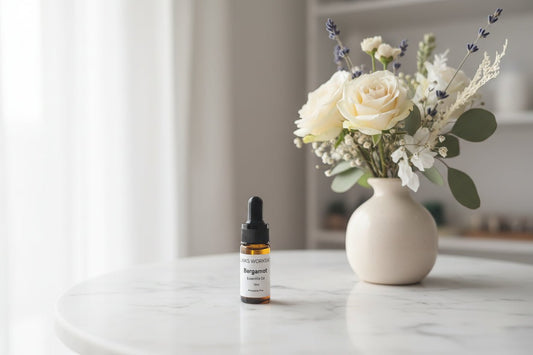
Ritual oils, essential oils & perfumes

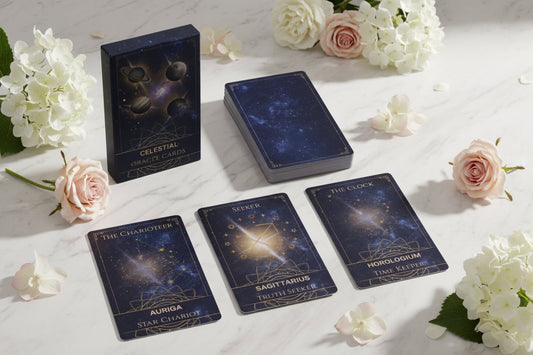
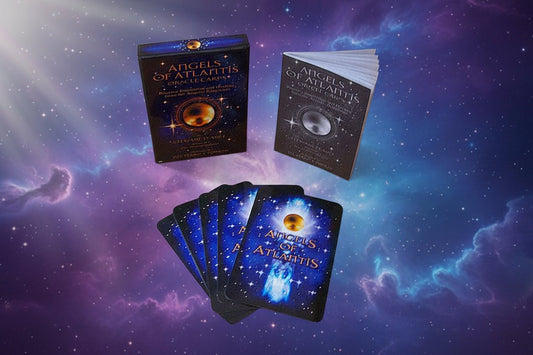
Deepen your practice: tarot & oracle cards

Wear it & work with it

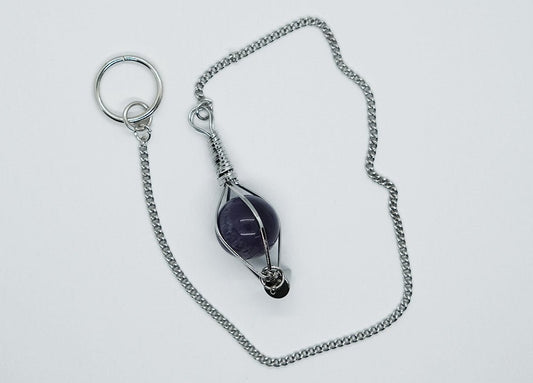
Amethyst jewellery & pendulums

Amethyst FAQs

What is amethyst's birthstone month?

Amethyst is the birthstone for February.

Does amethyst fade?

Yes, prolonged strong sunlight or heat can fade its colour. Display it away from sunny windows.

What does the name amethyst mean?

It comes from the Greek amethystos, meaning 'not intoxicated'.

Related crystals

  • Charoite

    Charoite

    Swirling lilac-purple stone found in only one place – near the Chara River in Siberia.

  • Sugilite

    Sugilite

    Rich royal-purple stone discovered in Japan and found in gem quality mainly in South Africa.

  • Ametrine

    Ametrine

    A rare natural blend of amethyst and citrine in one crystal, mined almost entirely in Bolivia.

  • Citrine
    In our shop

    Citrine

    Golden quartz and November birthstone – the crystal lore 'merchant's stone' of abundance and optimism.
Sources